PLANT CITY, FL · HILLSBOROUGH COUNTY
Destroy Every Termite, Every Colony. For Good
Termite Treatment in Plant City, FL
Termites don’t respond to store-bought treatments or DIY solutions. They respond to certified professionals using industrial-grade elimination protocols. Call now and speak directly with a local Plant City termite specialist today.
Termites Cost Florida Homeowners Billions. Your Home Shouldn’t Be Part of That Number.
Florida leads the entire country in termite pressure. The combination of year-round warmth, high humidity, and sandy soil creates ideal conditions for multiple termite species to thrive simultaneously. In Plant City and across Hillsborough County, that pressure is real and it is growing.At Plant City Pest, we provide professional termite inspections and treatment for homes and businesses throughout Hillsborough County. We identify the species present, recommend the right treatment method, and protect your property long term. This page explains everything you need to know about termites in this area, because an informed homeowner is a better-protected one.
At Plant City Pest, we provide professional termite inspections and treatment for homes and businesses throughout Hillsborough County. We identify the species present, recommend the right treatment method, and protect your property long term.
The Termite Threat Is Getting Worse in Hillsborough County
This is not alarmist. It is documented.
University of Florida researchers confirmed that Asian subterranean termites, one of the most destructive termite species in the world, have established themselves in Hillsborough County. Pest control operators across the county began submitting specimens for identification, and UF/IFAS confirmed the species is now active in the Tampa area. Researchers believe the initial infestation likely began seven to ten years before detection.
At the same time, Formosan subterranean termites continue their spread across Florida’s west coast, with Hillsborough County in their path. A 2026 University of Florida study confirmed both invasive species are moving further into central Florida faster than earlier predictions suggested.
This matters for Plant City homeowners because both species are far more destructive than the native eastern subterranean termite. Their colonies can number in the millions. They consume wood faster. And they are significantly harder to eliminate once established.
If you have not had a professional termite inspection recently, now is the right time.
Call now for a same-day Termite inspection in Plant City, FL.
Warning Signs You May Have Termites
Most homeowners find out they have termites far later than they should. Here is what to look for.
Mud tubes on your foundation.
These pencil-width tunnels appear along foundation walls, slab edges, and crawl space supports. Subterranean termites build them to travel between the soil and the wood in your home. Even a tube that looks old may indicate an active colony nearby.
Swarmers indoors.
Swarmers are winged reproductive termites that emerge from a mature colony. Finding them inside your home almost always means an established colony is already present.
Discarded wings near windows and doors.
Swarmers shed their wings after landing. Small piles of wings near windowsills, sliding glass doors, or light fixtures are a clear warning sign.
Hollow sounding wood
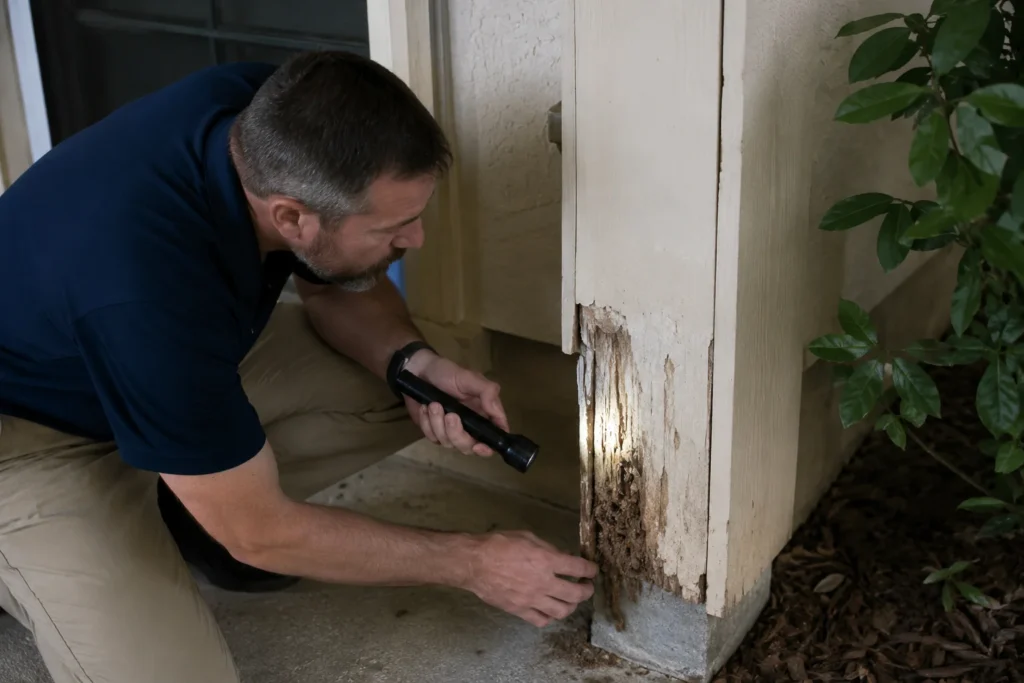
Termites feed from the inside out, leaving a thin outer shell intact. Tap on baseboards, floor joists, and door frames. Wood that sounds hollow or papery when tapped has likely been damaged internally.
Frass near baseboards or furniture.
Small sand-like pellets near baseboards, inside closets, or beneath furniture point to drywood termite activity. Termites push these pellets out through tiny holes in the wood surface.
Bubbling or peeling paint.
As termites tunnel through wood behind your walls, they create air pockets. Those pockets cause paint to bubble or separate from the surface. This is frequently mistaken for water damage.
Liquid Barrier Treatment
A technician trenches around the foundation and applies liquid termiticide into the soil. Modern non-repellent products allow termites to contact the treated zone, pick up the product, and carry it back to the colony. This method is fast acting and provides strong immediate protection for subterranean termite infestations.
Termite Bait Stations
Stations are placed in the soil around your home at regular intervals. Foraging termites find the bait, feed on it, and share it with the rest of the colony. The active ingredient works slowly enough to spread throughout the colony before taking full effect. Bait systems work well for long-term monitoring and for early-stage or preventative situations.
Tent Fumigation
Whole-home fumigation covers your home with a tent and fills it with a gas that penetrates all wood throughout the structure. This is the most effective method for widespread drywood termite infestations where termites are living inside walls and attic framing. You will need to leave your home for two to three days. Fumigation does not prevent new subterranean termites from entering after treatment, so it is often paired with a barrier or bait system for full protection.
Localized Spot Treatment
For small, isolated drywood termite colonies, targeted termiticide injection directly into infested wood can be sufficient without full fumigation. This is appropriate only when a professional confirms the infestation is truly limited in scope.
(813) 761-7215
What Happens During a Professional Termite Inspection
A thorough inspection covers your entire property. Technicians check the foundation perimeter, crawl space, attic, slab edges, window frames, and any areas where wood meets soil. They look for active termites, mud tubes, frass, swarmers, and structural damage.
Older Plant City homes built on slab foundations, particularly those constructed between the 1960s and 1990s, often have vulnerabilities that require careful attention. Homes with mature oak trees, wooden fencing near the ground, or wood mulch piled against the foundation face elevated risk.
After the inspection, you receive a clear explanation of what was found, which species are present, how far the activity has spread, and what your treatment options are.
Eastern Subterranean Termites
This is the most common termite species in the eastern United States. They live underground and travel to your home through the soil. They build narrow mud tubes along your foundation to reach the wood inside your walls. A mature colony causes major structural damage long before most homeowners notice anything wrong.
Formosan Subterranean Termites
Formosan termites are an invasive species with a well-earned reputation. Their colonies can contain millions of individuals. They consume wood far faster than native subterranean species. They can also build secondary nests inside wall voids and attic spaces, which makes them harder to fully eliminate. Formosan termites have been confirmed in Hillsborough County and their range is still expanding.
Asian Subterranean Termites
UF/IFAS researchers confirmed this species in Hillsborough County. Asian subterranean termites share similar destructive behavior with Formosan termites. Detection is especially difficult because they typically begin infesting trees before moving into nearby structures. If you have mature trees on your property, this species deserves attention.
Drywood Termites
Drywood termites do not need soil contact. They fly directly into wood and establish colonies inside window frames, attic beams, fascia boards, and furniture. They leave behind frass, which looks like fine sawdust near tiny holes in wood. They require a completely different treatment approach than subterranean species.
Dampwood Termites
Dampwood termites infest wood that is moist from leaks, poor drainage, or ground contact. They are common throughout Hillsborough County and frequently found in homes with roof leaks, plumbing problems, or wood siding touching the soil.
Frequently Asked Questions (FAQs)
Termite Treatment Across All of Hillsborough County
Plant City homeowners, as well as residents in Brandon, Seffner, Dover, Valrico, Thonotosassa, and Temple Terrace, all face the same elevated termite pressure. Whether your home is a newer build or a decades-old property near the Strawberry Festival grounds, professional termite protection is one of the most important investments you can make.